Cold Storage Evaporator Selection: Key Factors to Consider
The evaporator is often the most overlooked component in refrigeration system design. While much attention goes to the compressor unit and condenser, it is the evaporator that ultimately determines how effectively cooling energy is transferred into the storage space or product. Choose the wrong evaporator, and you face higher energy bills, poor temperature control, excessive defrost cycles, and shortened equipment life. Choose the right one, and your system runs reliably for decades with predictable operating costs.
This guide walks through the key selection criteria for evaporators in cold storage, food processing, and industrial refrigeration applications. Whether you are planning a new facility or upgrading an existing system, these considerations will help you make a more informed decision.
Why the Evaporator Matters More Than You Think
The evaporator is where the actual cooling happens. Refrigerant absorbs heat from the air or product, changing from liquid to vapour. The efficiency of this heat exchange directly affects the suction pressure and temperature returning to the compressor. An undersized or poorly matched evaporator forces the compressor to work harder, increasing energy consumption and reducing system capacity. An oversized evaporator may cause short cycling, poor humidity control, and unnecessary capital expense.
For cold storage rooms, the evaporator must maintain uniform temperature throughout the space. Hot spots lead to product spoilage, while uneven airflow can cause frost buildup on some coils while others remain dry. In blast freezers, the evaporator must handle rapid heat removal without excessive pressure drop. Each application demands a different design approach.
Key Selection Criteria
1. Operating Temperature Range
The first and most fundamental question is the required room temperature. Evaporators are designed for specific temperature bands:
- High-temperature (above 0°C): For fruit and vegetable storage, chilled processing areas. Typically use higher fin spacing and lower air velocity to minimise dehydration.
- Medium-temperature (-5°C to 0°C): For dairy, meat ageing, and general cold rooms. Balance between cooling capacity and frost formation.
- Low-temperature (-25°C to -5°C): For frozen food storage and ice cream. Requires more frequent defrost and careful fin design to prevent ice bridging.
- Extra-low-temperature (below -25°C): For blast freezing and special applications. Heavy-duty coils with robust construction and efficient defrost systems.
Selecting an evaporator rated for a lower temperature than required may seem safe, but it often reduces efficiency because the coil operates at a lower suction pressure, reducing compressor capacity. Always match the evaporator's design temperature to the actual room setpoint.
2. Refrigerant Compatibility
Evaporators are not universal. Different refrigerants have different heat transfer characteristics, pressure drops, and oil return requirements. Ammonia (NH₃) systems typically use steel or stainless steel coils with large diameter tubes. CO₂ systems operate at high pressures and require specially designed coils with thicker walls and smaller tube diameters. HFC and HFO systems use copper tubes with aluminium fins as the most common construction.
If you are planning to use a low-GWP refrigerant like CO₂ or R-290, ensure the evaporator manufacturer has tested and certified the coil for that refrigerant's operating pressures. Retrofit projects require careful evaluation: an evaporator designed for R404A may not perform well with R448A or R290 due to different glide and pressure-drop characteristics.
3. Fin Spacing and Airflow
Fin spacing is one of the most critical design parameters. Narrower fin spacing (e.g., 4–6 mm) increases the heat transfer surface area, improving capacity and reducing the physical size of the coil. However, it also increases air pressure drop and accelerates frost buildup. In cold storage rooms with high humidity or frequent door openings, wider fin spacing (e.g., 8–10 mm or more) reduces defrost frequency and improves airflow distribution.
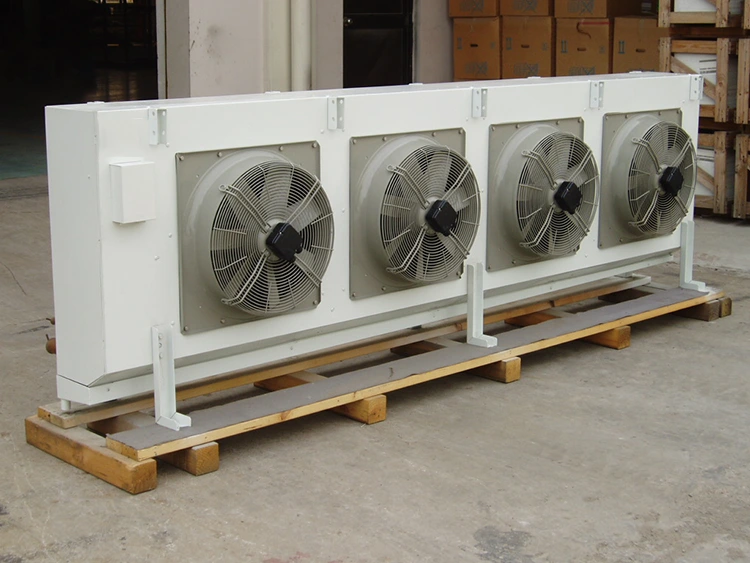
Airflow pattern matters equally. Ceiling-mounted evaporators typically project air horizontally across the room to ensure even distribution. Floor-mounted units or those with multiple fans can provide better mixing for larger spaces. Always check the throw distance and airflow coverage for your specific room dimensions.
4. Defrost Method
Every evaporator operating below 0°C will accumulate frost. How you remove that frost affects both energy consumption and storage temperature stability. The three common methods are:
- Electric defrost: Uses heating elements embedded in the coil. Simple to control, but energy-intensive and can cause temperature spikes. Best for small or medium-sized rooms with infrequent defrost cycles.
- Hot gas defrost: Directs hot discharge gas from the compressor through the evaporator. More energy-efficient than electric defrost, reduces temperature rise, and is widely used in medium and large systems. Requires proper piping design to avoid liquid slugging.
- Water defrost: Sprays water over the coil to melt frost. Effective for large industrial evaporators, but requires a drainage system and careful water treatment.
The choice affects not only the evaporator itself but also the entire system design, including piping, valves, and controls. Discuss your application with the evaporator supplier to select the most suitable defrost strategy.
5. Casing Material and Corrosion Resistance
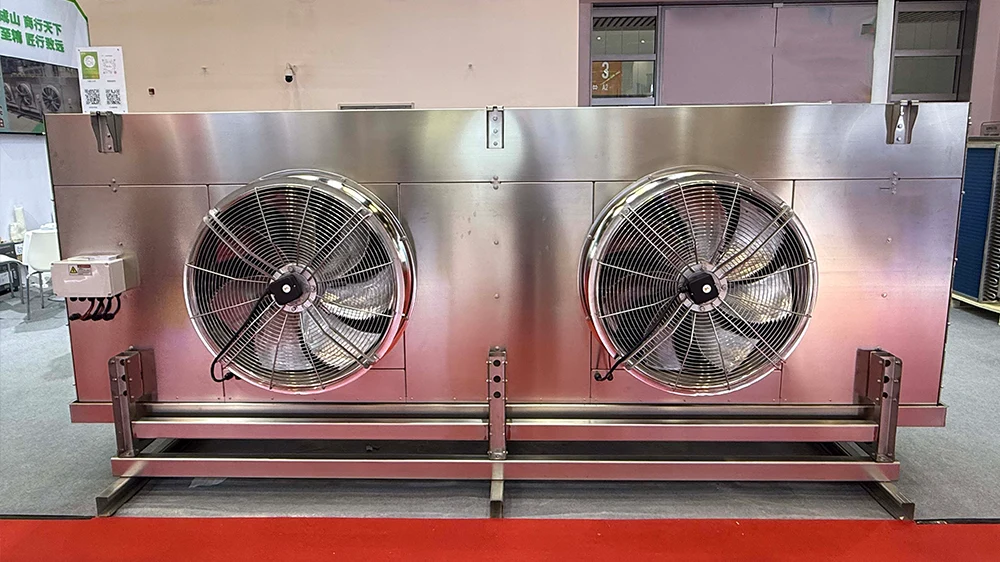
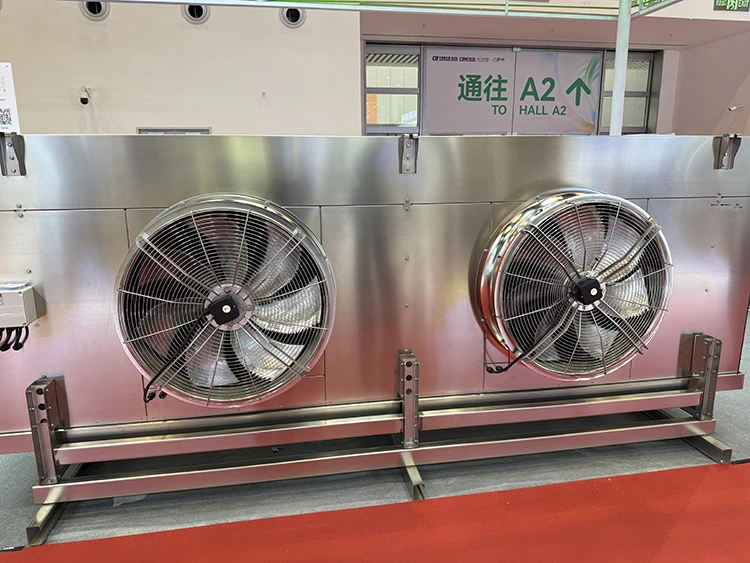
Evaporators are exposed to moisture, sometimes with aggressive contaminants. For food processing, pharmaceutical, and marine environments, stainless steel casings and coils are recommended. Galvanised steel is suitable for most dry or low-humidity cold stores but may rust in high-humidity or salt-laden air. Aluminium fin coils with copper tubes are standard for HFC systems, but if ammonia is used, the coil must be steel or stainless steel.
Consider also the coating on the casing and fins. Epoxy-coated or baked-phenolic coatings provide additional protection in corrosive environments. While they add to upfront cost, they can extend the service life of the evaporator by several years.
Common Mistakes to Avoid
Even experienced engineers sometimes make these errors when specifying evaporators:
- Sizing by tonnage alone: Two different evaporators with the same nominal capacity can perform very differently due to fin design, air velocity, and refrigerant distribution. Always review performance data at the actual operating conditions.
- Ignoring pressure drop: Excessive pressure drop in the suction line reduces compressor capacity and increases energy consumption. Ensure the evaporator's pressure drop is within the system's design limits, and that suction line sizing is adequate.
- Overlooking oil return: In HFC systems, oil circulates with refrigerant. Poorly designed evaporators can trap oil, reducing heat transfer and eventually damaging the compressor. Verify the evaporator is designed for proper oil return at your operating conditions.
- Choosing based on price alone: A cheaper evaporator may have thinner tubes, lower fin density, or inferior corrosion protection. Over the lifetime of the equipment, the operating cost savings from a higher-quality unit typically outweigh the initial price difference.
- Not planning for future capacity: If your cold storage may expand or change use, consider an evaporator that can accommodate a slightly higher capacity or multiple fans that can be staged.
Application-Specific Considerations
Different industries have unique requirements that influence evaporator selection:
- Food processing: Hygienic design with rounded corners, smooth surfaces, and minimal crevices. Easy cleaning access and drainage. Often requires stainless steel construction.
- Blast freezers: High air velocity, heavy fin density, and rapid defrost capability. The evaporator must handle large transient heat loads from incoming product.
- Pharmaceutical storage: Tight temperature control (within ±1°C) and backup systems. Evaporators with electronic expansion valves and precise fan control are preferred.
- Ammonia systems: Steel tubes, steel fins, and often flooded or pumped circulation designs. Special attention to safety and material compatibility.
- CO₂ systems: High-pressure components, smaller tube diameters, and often brazed plate or microchannel designs for transcritical operation.
Always share your full application details with the evaporator supplier. The more they know about your product, loading patterns, and operating schedule, the better they can recommend the optimal solution.
Verification and Testing
Before committing to a large order, consider requesting a performance test report or witnessing a factory test. Reputable manufacturers provide certified capacity data based on AHRI or EN standards. Ask for performance curves at various entering air temperatures, refrigerant temperatures, and airflow rates. Check that the defrost heater wattage, fan motor power, and drain pan heating are adequate for your climate and duty cycle.
If possible, request a sample coil or visit a reference installation similar to your project. Seeing a unit in operation can reveal details that cannot be captured in a data sheet.
Putting It All Together
Choosing the right evaporator is not a simple binary decision, but a series of trade-offs between capacity, efficiency, defrost frequency, material cost, and maintenance. The most reliable approach is to work with a manufacturer that offers engineering support and can guide you through the selection process. A good supplier will ask the right questions, provide clear performance data, and help you compare options before you commit.
Remember, the evaporator is not a commodity. It is a critical component that will operate 24/7 for years. The extra time spent in selection is repaid many times over in lower energy bills, fewer service calls, and consistent product quality.
For your next cold storage, blast freezer, or industrial refrigeration project, take the time to evaluate evaporator options thoroughly. Your compressor, your energy bill, and your product will thank you.
If you need expert guidance on selecting the right evaporator for your specific application, contact our sales team or visit our evaporator product page for detailed specifications.
Related News
- High Temperature Unit Coolers Become More Important in Modern Cold Storage Systems
- Improving Industrial Refrigeration Efficiency with Open-Type Single-Stage Screw Refrigeration Compressor Units
- CO₂ Refrigeration Systems Are Reshaping Global Cold Chains: What You Need to Know in 2026
- How to Choose the Right Evaporator for Your Cold Storage Project: A Practical Guide
Leave me a message